
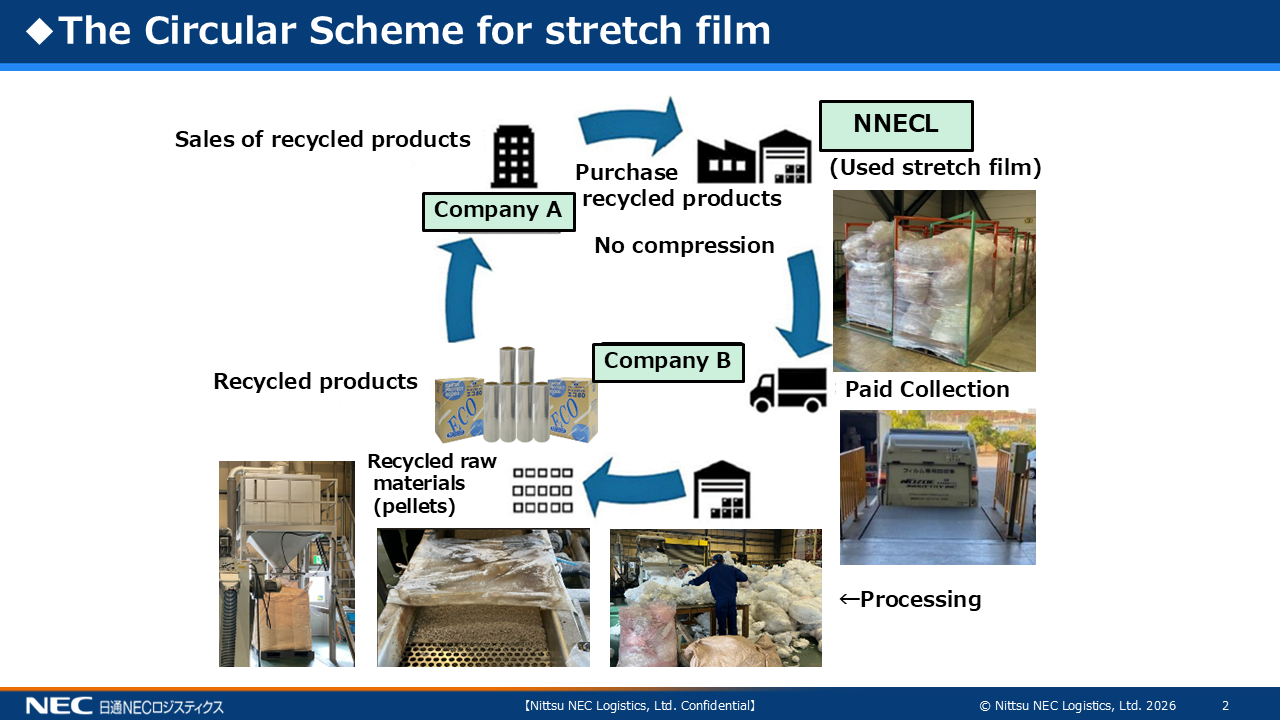
Nittsu NEC Logistics, Ltd. develops and expands a resource circularity model that balances environmental protection with economic viability as a key component of sustainability management.
The company places particular emphasis on recycling materials widely used in logistics operations, including plastic pallets, bubble wrap, and stretch film. Stretch film, one of the most widely used materials, is recycled through a proprietary circular process that collects used film, regenerates the material, and returns the recycled resin to production as a raw material. The defining feature of the resource circularity framework is the shift from conventional industrial waste disposal to purchasing recyclable materials as valuable resources. This shift reduces waste and disposal costs while simultaneously generating revenue. Nittsu NEC Logistics has begun introducing the resource circularity framework at major sites, starting with the East Tokyo Branch, and has launched development of a similar framework for polypropylene (PP) strapping.
The company has set an ambitious target of reducing waste by 80 tonnes and costs by 10 million yen in fiscal 2026. As of the first quarter of fiscal 2026, the company has already reduced waste by approximately 39 tonnes and related costs by approximately 2.31 million yen following the introduction of the resource circularity framework at the top seven sites accounting for approximately 80% of total waste volume.
Nittsu NEC Logistics will continue strengthening resource circularity initiatives to help build a more sustainable society.